
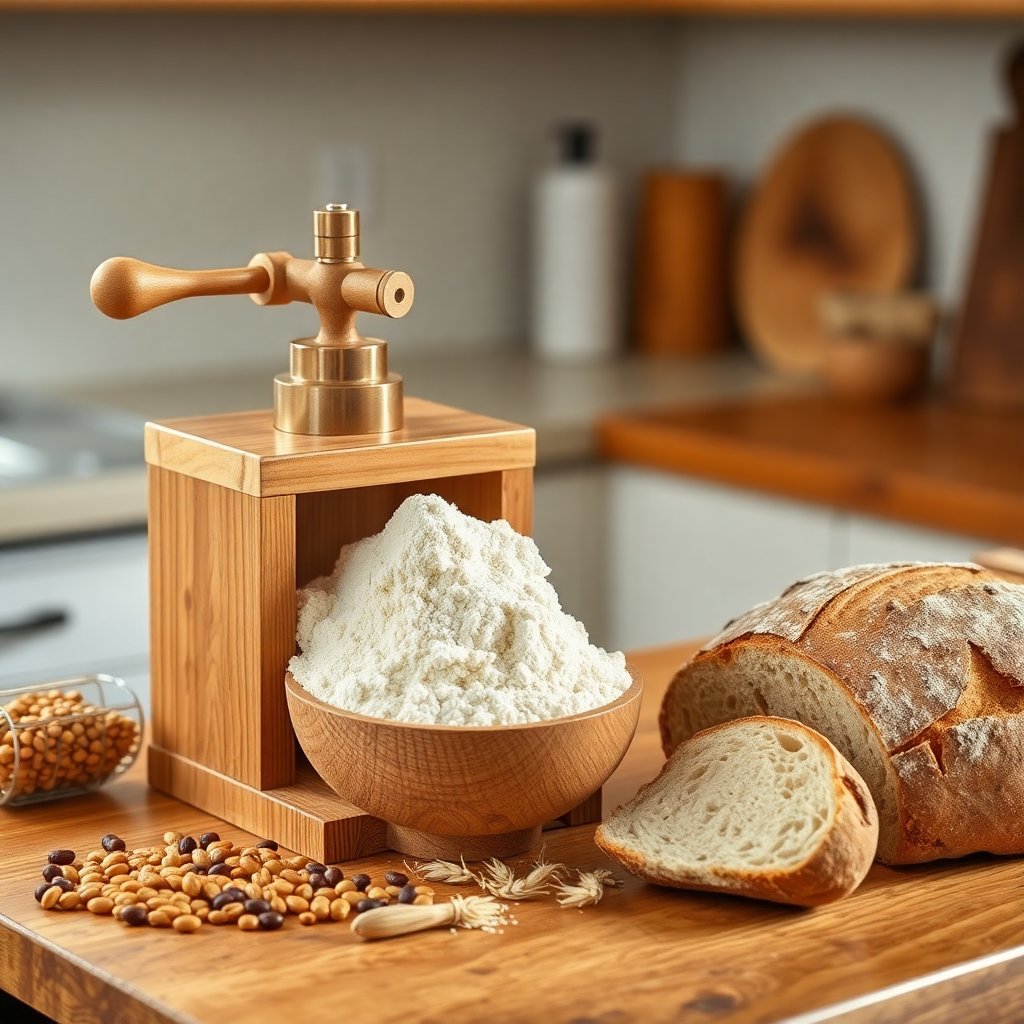
Once your sourdough is consistent, flour becomes the most interesting variable left. Bakers who start milling their own grain tend to describe the same thing: a loaf that smells sweeter and nuttier, a crumb with more character, and a starter that seems livelier on fresh whole grain. A home grain mill turns a bag of wheat berries into flour minutes before you mix, and it opens up grains like spelt, einkorn, and rye that can be hard to find fresh at the store.
A mill is also a real purchase, and the market is confusing. Stone burrs, impact chambers, mixer attachments, hand cranks — they all make flour, but they make it differently. This guide explains the mill types, what fresh-milled flour does to your dough, and which kind of mill fits the way you bake.
Affiliate disclosure: Crumbwise earns a commission from qualifying Amazon purchases made through links on this page, at no extra cost to you. Prices and availability shift, so check the current listing before you buy.
Why Mill Your Own Flour?
Flavor and freshness. Whole grain flour contains the bran and germ, and the germ holds oils that start to oxidize after milling. That is why store-bought whole wheat flour can taste flat or slightly bitter, and why it has a shorter shelf life than white flour. Milling right before you bake sidesteps most of that.
Access to more grains. With a mill and a few bags of berries you can bake with hard red wheat, hard white wheat, spelt, einkorn, emmer, rye, and more without hunting for specialty flour.
Cost over time. Whole wheat berries bought in bulk usually cost less per pound than premium whole grain flour, and unmilled grain stores far longer in a cool, dry place. The savings will not pay off a mill in a month, but regular bakers do recoup some of the cost.
Nutrition. Whole grain flour keeps the bran and germ, which carry fiber and other nutrients refined flour loses. The Whole Grains Council is a good starting point if you want to read more about whole grain nutrition and the differences between grains.
The Three Main Types of Grain Mill
Stone-Burr Countertop Mills
Best for: dedicated sourdough bakers who want flavor and control. Mills such as Mockmill and KoMo use a pair of burrs, typically made from a corundum-ceramic composite, to grind grain between a stationary and a rotating stone. You adjust the gap to go from coarse cracked grain to fine flour. Many models come in wooden housings designed to live on the counter.
Pros: wide range of textures, cool and steady milling, excellent flavor, handles most grains including spelt, rye, and einkorn. Popular with bakers who mill daily.
Cons: higher price, and the finest setting may still be a touch coarser than a high-speed impact mill. Oily seeds and wet grains can glaze the stones, so stick to dry grains.
→ Shop countertop stone grain mills on Amazon
Impact (Micronizer) Mills
Best for: high-volume bakers who want very fine flour fast. Electric impact mills such as the NutriMill Classic and WonderMill use high-speed stainless steel fins to shatter grain into flour. They are fast, they produce very fine flour that works well in sandwich loaves and pastry, and they usually cost less than premium stone mills.
Pros: speed, very fine texture, large capacity, often a lower price.
Cons: loud, limited coarse settings (not ideal for cracked grain or porridge breads), and they do not handle oily seeds or very small grains as flexibly as stone mills.
→ Shop electric impact grain mills on Amazon
Stand-Mixer Attachments
Best for: trying home milling without buying another appliance. KitchenAid and other mixer brands sell grain-mill attachments that bolt onto the mixer's power hub. Mockmill has also sold a stone-burr attachment designed for stand mixers.
Pros: smallest footprint, lowest price of entry if you already own a compatible mixer.
Cons: slower, and long milling sessions put real load on the mixer. Grinding a large batch to fine flour may take a while, and some owners mill in two passes. If you bake bread several times a week, a dedicated mill is the better long-term tool. If you are still choosing a mixer, our stand mixer guide for sourdough covers which models handle heavy dough.
→ Shop stand mixer grain mill attachments on Amazon
A Note on Hand-Crank Mills
Manual mills are useful for emergency preparedness and off-grid kitchens, but grinding enough fine flour for a loaf by hand is a serious workout. For regular sourdough baking, an electric mill is far more practical.
How to Choose the Right Mill
- How often do you bake? Once a week or less: an attachment or entry-level mill is plenty. Several loaves a week: a dedicated stone or impact mill.
- Coarse or fine? If you want cracked grain for porridge breads or rustic loaves, choose stone. If you mostly want very fine flour for soft loaves, an impact mill does that well.
- Noise tolerance. Impact mills are loud. Stone mills are quieter but not silent.
- Counter space. Wood-housed stone mills are designed to stay out; impact mills are often stored in a cabinet.
- Grains you plan to use. Stick to dry cereal grains for any mill. Check the manufacturer's list before milling corn, legumes, or anything oily.
How Fresh-Milled Flour Changes Your Sourdough
This is where many new home millers stumble. Fresh whole grain flour does not behave like the bag of bread flour you are used to.
It drinks more water. Bran absorbs a lot of water, so dough made with fresh whole grain usually needs higher hydration than a white-flour recipe. Start a few percentage points higher than your usual formula and adjust. Our sourdough hydration guide explains how to work up gradually.
It ferments faster. Whole grain flour brings more food and more wild microbes to the party. Many bakers find bulk fermentation moves noticeably faster, especially in a warm kitchen. Watch the dough, not the clock.
Gluten is weaker. Sharp bran particles can cut gluten strands, so a 100% whole grain loaf will be denser than a white loaf. Many bakers blend fresh flour with bread flour, starting at 20 to 30% fresh-milled and working up from there. Our bread flour guide covers good partners for blending.
Sifting is an option. Running fresh flour through a fine sieve removes some of the coarse bran, giving you a lighter "high-extraction" flour. Save the sifted bran to dust bannetons or add to the next loaf.
→ Shop flour sifters and baking sieves on Amazon
Which Grains to Start With
- Hard white wheat: mild and slightly sweet, an easy first grain for bakers used to white flour.
- Hard red wheat: the classic robust whole wheat flavor with good protein for bread.
- Spelt: nutty and extensible, ferments quickly, makes a softer dough.
- Rye: earthy and sour, low gluten strength, wonderful in blends and dense loaves.
- Einkorn: an ancient grain with a golden crumb and a sticky, weak dough that needs gentle handling.
Buy berries from a supplier that labels the variety and harvest, store them airtight in a cool spot, and mill only what you need for each bake.
→ Shop organic hard wheat berries on Amazon
Care and Maintenance
- Keep grain dry. Damp or oily grain can clog impact chambers and glaze stones.
- Run a little white rice or dry grain through stone mills occasionally to clean the burrs, if the manufacturer recommends it.
- Do not run the mill empty for long periods.
- Store fresh flour cold if you are not using it right away. Whole grain flour keeps best in the fridge or freezer.
The Bottom Line
For most serious sourdough bakers, a countertop stone-burr mill is the best balance of flavor, flexibility, and quiet, everyday use. Choose an impact mill if you bake in volume and want very fine flour quickly, or a mixer attachment if you want to try home milling without committing counter space. Whatever you buy, expect fresh flour to need more water and ferment faster, start with a partial blend, and adjust one variable at a time. The first loaf with flour you milled that morning tends to convince people the mill was worth it.
As an Amazon Associate we earn from qualifying purchases. This article contains affiliate links; if you buy through them we may earn a small commission at no additional cost to you.